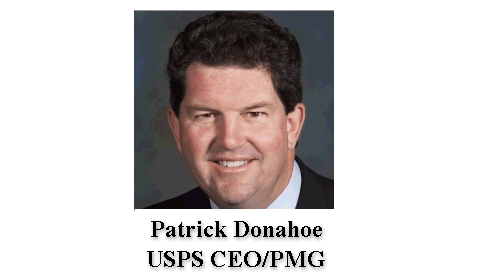
In his latest “State of the Business” video to employees, PMG Pat Donahoe says the proposal to move away from the current Federal Employee Health Benefits Plan (FEHBP) to a USPS-sponsored benefit is a vital element of a more sustainable business model.
“This all ties into the larger picture of what we’ve been talking about over the last several months regarding legislative change,” said Donahoe. “The whole idea and aim is to secure a strong financial future for the organization, the industry and for you as an employee.”
Donahoe acknowledged that employees are used to the FEHBP and feel comfortable in knowing they’re part of a large plan. “But that doesn’t mean it’s the best plan or the plan that offers the best flexibility for you or the Postal Service as a business,” said Donahoe. “By pulling this piece of our costs away from FEHBP, we’d be able to save about $500-700 million a year.”
The PMG said this proposal is the same business model followed by other large companies with extensive employee bases such as General Electric and IBM. “These companies leverage their size to get the lowest cost and best value for their employees,” he said. “This is the model USPS wants to follow.”
“While all of us have been taking great steps to reduce our costs, the health care cost is one we’re unable to address in its current model,” said Donahoe. “We need to change this. We need the support to own this program to maximize the benefit to you as an employee and to the Postal Service.”
The Postal Service’s proposal will require congressional approval. It will allow USPS to establish its own health benefits program.
Yep !! Left IBM in 1992 with the promise of health insurance for the rest of my life, They were fairl on what I had to pay for a couple of years then the cost went out of sight, that is one reason IBM manufacturing folks joined the union…(So now I have put in 16 years with USPS and they want to do the same thing
Employees and retirees have worked their lives with the understanding they would have comprehensive medical benefits in their later years when they need them the most. But USPS Senior management wants to change the rules after the game has been played, saving money by delivering less than what has been promised. Leave USPS health care in the able hands of the federal Office of Personnel Management. They have the expertise to provide the best possible care at the lower possible cost. USPS senior managers, with their eyes fixed on their balance sheets, propose something here that would literally put the life and health of employees and retirees at risk.
The postal unions keeps wanting it to be other reasons than lack of mail volume for USPSs current difficulties. Yes overpayments are a part of it (despite what GAO says) but postal employees are going to have to take some cuts to pay and benefits to stabilize the USPS. Rather than opt of the FEHBP lets stay in and pay a little higher rate like the rest of Uncle Sam workers already do.
Never known of USPS comming up with anything to benifit any craft, but guess there is a 1st time for everything. Just have to wait and see.
I believe that the PMG has an outstanding proposal. If the benefit of a health plan owned by the USPS can reduce costs, have better coverage in service and medicine, it will be of benefit to everyone. If it can be brought down to no deductions to pay and a better dental plan (since the idea is to recduce costs and better coverage), I totally agree with Mr. Donhoe. However, we must see what’s in the sack before totally accepting his proposal.
How about giving up some of your salary / bonuses if we are in such a financial mess?
Hey, hey.
Ho, ho.
Donahoe
Has got to go.
Of Course the PMG ommitted the Corporation named “Wal-Mart” from his listing of “GE and IBM” that he had prior to this indicated as an example. Also the PMG does not state that these corporations provide different levels of coverage for Execs and Management than they do for employees; and that the additional $500-700 million per year will ensure future bonuses paid to managers and departing PMGs deferred payments.