PEN Note: The report below is basically the same as the one we published previously – only a few minor changes.
GAO: 9/17/26 – You may have noticed that mail is taking longer to deliver. In recent years, the U.S. Postal Service (USPS) has added 1 to 2 days to some of its expected delivery times. It’s also eliminated end-of-day collection at some post offices, which added more time to those deliveries.
Today’s WatchBlog post looks at our new report on changes to USPS service and why.
How are USPS’s financial challenges adding to delivery times?
USPS has a tough balancing act. It must offer prompt, reliable, and efficient deliveries to everyone in the U.S. (even those who live off the beaten path) while also supporting itself financially. But USPS has not been able to balance these competing demands over the last 20 years. It has lost money almost every year since 2007.
In 2021, USPS launched its Delivering for America plan. This 10-year strategic plan aimed to improve service while cutting costs and moving USPS toward financial self-sufficiency. Three initiatives under this plan have directly affected delivery times:
Air to ground transportation. USPS shifted mail volume from air to ground transportation to reduce expenses. But ground transportation can add time to deliveries. To compensate, USPS lengthened some First-Class Mail delivery time estimates.
Processing and delivery network redesign. USPS is building and updating facilities to create regional hubs that it hopes will improve its efficiency. But some regional facility rollouts have also caused service delays.
Regional transportation changes. Some mail drop-off locations that are farther from regional processing centers stopped end-of-day or afternoon collection. This means that mail dropped off after the morning pickup sits until the next business day. For customers, the result is that some First-Class Mail now has an extra day or two built into its expected delivery time.
Who’s feeling the impact of changes the most? Rural residents may be feeling the impact of changes the most. Rural post offices are often farther from regional processing centers. As a result, they are more likely to be affected by the changes to end-of-day or afternoon collection.
USPS has set new service goals, but it’s not meeting them
USPS has set new delivery deadlines and service goals. But it has struggled to meet them. Knowing this, USPS has taken some steps to improve. For example, it:
- Uses its annual performance assessment that links service results, like on-time delivery, to employee compensation.
- Created a Chief Performance Office. This office develops diagnostic tools and dashboards and participates in regular service-performance meetings.
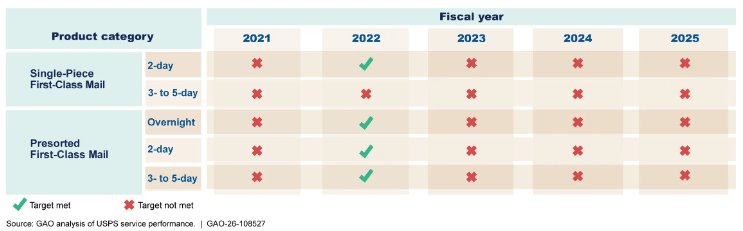
But despite these changes, many deliveries are still missing their target times. Specifically, USPS has missed most First-Class Mail service targets since 2022, even after standards were lowered to account for the impact of new initiatives.
USPS’s Service Performance for Selected First-Class Mail Products, Fiscal Years 2021-2025
What should USPS do to improve? Longer delivery times can matter for time-sensitive mail—including bill payments, medications, and tax filings. Customers need clear information about what USPS’s operational changes mean for them.
We think USPS should provide more of that information to Congress and the public. And we recommended that it do so in its next strategic plan update—due in 2027. This should include information on planned service improvements, their expected effects, and challenges USPS faces in improving performance.
This information will help Congress, customers, regulators, and other stakeholders understand what USPS is doing and what results to expect.

this is all bullshit….usps hires persons not for what they can do but for what they are in the name of diversification…i.e can’t spell, count or NO knowledge of the geography of the CORPORATE STATES OF AMERICA
Yeah man, Steiner and Tulino will get right on that, just like all of the congressional inquiries they’ve ignored. They’re just so busy formulating their “modest” proposal that it’s unrealistic to expect them to do much else, and they certainly haven’t done much either.