The WEP is Unfair – and Here’s Why
Americans across the country pay into Social Security and expect to receive the benefits they have earned when they retire. Unfortunately, because of a well-intended but flawed policy known as the Windfall Elimination Provision, or the WEP, some workers — specifically teachers, firefighters, police officers and others who have paid into Social Security for part of their careers but not all of it — are not treated fairly.
As the Bipartisan Policy Center explained:
“Many state and local government workers are not covered by Social Security, meaning that employees and their employers do not contribute payroll taxes on their earnings from those positions. Yet many of these workers also work part of their careers (or work part-time) in covered employment and will still be eligible for Social Security benefits. The WEP was originally designed to prevent these individuals from receiving unintentionally large Social Security benefits, but its methodology is overly complex and does not allocate benefits equitably.”
That’s not fair. Here’s why:
1. The benefits for workers who choose to serve their communities are calculated differently than other workers. The WEP only applies to certain workers who didn’t pay into Social Security for part of their careers. That means many teachers, fire fighters, and police officers could have their benefits reduced by up to 56 percent just for choosing to serve their communities. Here’s an example: A kindergarten teacher who works at a local supply store during the summer will have his Social Security benefits calculated using a different formula than his neighbor who has worked only at the supply store.
2. For some, the WEP is not based on their entire earnings history. The benefits some workers receive upon retirement do not reflect the actual earnings over the course of their career. The WEP tries to fix this but uses an arbitrary formula that is based on a Washington compromise. This arbitrary formula would affect someone who served as a police officer before becoming a private security guard. On the other hand, if he had spent his full career as a private security guard, his benefits would reflect his earnings history.
3. For those who choose to serve their communities, the WEP makes it harder to plan for retirement. The WEP does not show up on a worker’s Social Security statement. Here’s an example: A worker could think she is getting $1,227 a month when she retires, only to find out years later that she will receive nearly $800. For those who planned their retirement based on their Social Security statements, that unexpected reduction could have serious consequences. The whole point of Social Security statements is for workers to be able to plan, but for those subject to the WEP, these statements give wrong information.
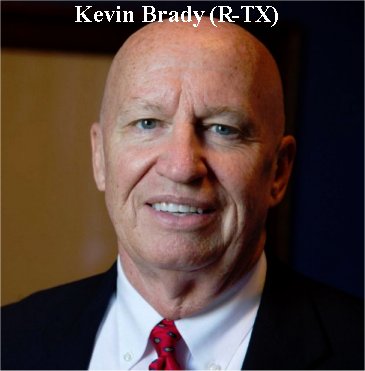
Ways and Means Chairman Kevin Brady (R-TX) and Rep. Richard Neal (D-MA) want to hear how the WEP has impacted you as they work on a solution to treat all workers fairly. Share your story with us atWEP.feedback@mail.house.gov.
CLICK HERE to learn how Social Security benefits are calculated and how the WEP applies.
CLICK HERE to share how the WEP has impacted you, or email WEP.feedback@mail.house.gov.
EQUAL TREATMENT OF PUBLIC SERVANTS ACT OF 2018
KEY POINTS
o Ensures that public servants who earn both a Social Security benefit and a pension from a Social Security substitute will finally receive treatment equal to other workers.
o Permanently repeals the current Windfall Elimination Provision (WEP) and instead uses a fair formula that treats public servants like all other American workers.
o Provides relief to current retirees already affected by the WEP.
o Social Security benefits will increase for teachers, fire fighters, police officers and other public servants currently subject to the WEP.
o Retired public servants currently subject to the WEP – and those who are near retirement – will receive a restoration of benefits payment that offsets a portion of the WEP reduction.
BACKGROUND
o The Equal Treatment of Public Servants Act guarantees public servants will receive Social Security benefits that reflect their actual work history.
o Social Security benefits will no longer be figured by the arbitrary WEP formula established in 1983. Instead, benefits will be based on each worker’s Social Security contributions – just like everyone else.
o Under the new formula, a worker’s benefit amount will be calculated using total lifetime earnings and then adjusted for the proportion of earnings that came from jobs where the individual paid Social Security taxes.
o The new formula will be phased in to allow individuals time to plan.
In Their Own Words: Retired Teachers, Police Officers, and Other Workers Explain How the Unfair WEP Impacts Their Social Security Benefits
OCTOBER 27, 2016
Today, some workers do not receive the Social Security benefits they have earned when they reach retirement. It’s because of the Windfall Elimination Provision (WEP)—a well-intended but flawed policy that treats some workers, like teachers, firefighters, and police officers, differently than other workers.
Ways and Means Committee Chairman Kevin Brady (R-TX) and Rep. Richard Neal (D-MA) are working to ensure Social Security treats all workers fairly. Recently, they asked Americans affected by the WEP for feedback. Here’s what people had to say:
“The experience and knowledge about business that I brought to teaching from my career in industry was so valuable but, instead of being rewarded for returning to the classroom, my retirement benefits were reduced for wanting to help students.” — Glenna S., retired teacher
“I continued working as a carpenter for years while working as a police officer, and continued to pay into Social Security. As I near retirement age, I understand that I will not receive my Social Security benefit like every other hard working American. Simply put, I paid a lot of money into Social Security. If I was not going to receive the benefit, then why did I have to pay all that Social Security Tax! This is not fair and needs to be changed.” — Michael S., police officer
“When I was going to turn 62, I applied for Social Security. I figured out my monthly benefit, which would have been about $700.00. However, the Social Security employee at the Ontario, CA Social Security office said that since I had worked in ‘Public Safety,’ the Windfall Elimination Provision would reduce my monthly benefit … I’m grateful to get any benefit at all, but I wish WEP had not cut it so much.” — Stephen S., retired parole agent
“My story is not much different from other men who dedicated themselves to hard work for what they wanted from life, but the Social Security retirement benefits are certainly different. I truly enjoyed my life’s work, but receiving the full amount of Social Security benefits I worked for would help me to enjoy my retirement years. The WEP is unfair.”— Danny B., retired teacher
“The reduced [Social Security] payments hit especially hard when the husband is a firefighter and the wife is a teacher. It’s a double-whammy of unfairness. We’ve both worked multiple jobs during our careers to support our family. Why can’t we benefit from that hard work?” — Martha T., retired teacher
“I worked for the USPS for over 31 years. Prior to working for the Postal Service I worked almost eleven years in the private sector … all together I worked for 42 years. I feel that I am being discriminated against for working my whole adult life … It is grossly unfair that civil servants of every profession will not be able to get the money we paid in to Social Security.” — Roseanne M., retired postal service worker
Brady, Neal Introduce Legislation to Ensure Equal Treatment for Teachers, Firefighters, Police Officers, and Other Public Servants When It Comes to Social Security
SEPTEMBER 28, 2018
Washington, D.C. – This week, House Ways and Means Committee Chairman Kevin Brady (R-TX) and Ranking Member Richard Neal (D-MA) introduced H.R. 6933, the Equal Treatment of Public Servants Act of 2018. This legislation finally gets rid of Social Security’s Windfall Elimination Provision (WEP) and replaces it with a new formula that makes sure that teachers, firefighters, police officers, and other public servants receive a Social Security benefit that is based on their actual work history. The legislation reflects ongoing conversations with stakeholders since the introduction of the previous version of the bill in the 114th Congress and is intended to facilitate further discussion and analysis.
Upon introduction of this bill, Chairman Brady and Ranking Member Neal released the following statement:
“Introduced by the two of us, this bill is intended to provide relief from the WEP for affected individuals in Texas, Massachusetts, and the rest of the country. Workers nationwide pay into Social Security with the expectation that they will receive the benefits they’ve earned when they retire. As we have known for some time, WEP, though well intentioned, has treated many of our public servants unfairly. This legislation is part of continued efforts to ensure that public servants who earn both a Social Security benefit and a pension from a Social Security substitute are treated fairly when it comes to Social Security.
“We know there is room for improvement, and we encourage feedback on the bill as work continues to address the WEP. It’s time to stand up for our teachers, firefighters, and police officers in our states and all across the country.”
Stakeholders are encouraged to send feedback to: WEP.feedback@mail.house.gov.
ICYMI – Brady, Cruz op-ed: It’s time to give teachers and other public servants fair retirement pay
OCTOBER 11, 2018
Dallas Morning News
It’s time to give teachers and other public servants fair retirement pay
By House Ways and Means Committee Chairman Kevin Brady (R-TX) and Senator Ted Cruz (R-TX)
For over three decades, too many Texas teachers, police officers, firefighters, and other public servants have done their vital work while being subjected to a well-intentioned, but unfair, one-size-fits-all approach to calculating their earned Social Security benefits. It’s time for that to change.
Now, through the Equal Treatment of Public Servants Act, bipartisan legislation that we introduced together in the House and Senate, these dedicated men and women can be treated fairly as the accomplished individuals they are, receiving Social Security in line with their work history.
The root of today’s problem is a policy called the Windfall Elimination Provision, or WEP, which was put in place in 1983. It may sound like accounting jargon smothered in bureaucracy, but it has unfairly penalized tens of thousands of Texas teachers, police officers, firefighters and other public servants.
Our legislation permanently repeals the current Windfall Elimination Provision, and instead uses a fairer formula that treats public servants like all other American workers.
Some folks, like 95 percent of all Texas public school employees, were not required to pay Social Security payroll taxes under their state or local government jobs because they were paying into an alternative system, such as TRS, but did pay into Social Security through a second job, often in the private sector.
Prior to the WEP, these folks had their Social Security benefits calculated using the same formula as everyone else. However, this sometimes meant that they earned a higher retirement benefit than their work history supported, and consequently gave them a “windfall” of benefits.
The WEP was originally put in place with the intention to prevent this windfall from happening. Instead of creating a fair formula, however, the newly-created WEP forced all public servants who also paid into Social Security into an arbitrary, one-size-fits-all reduction in benefits, with not all public employees being treated equally. Today, the WEP affects over 170,000 Texans.
Additionally, retired public servants often did not know that they would be affected by the WEP until they claimed Social Security benefits, since the reduction did not show up in their Social Security statements.
This is a poor way to compensate the dedicated men and women who are engaging in the important work of teaching our children, protecting our communities and making our cities function well. They deserve better.
The Equal Treatment for Public Servants Act rights this wrong by creating a new formula, one that calculates benefits by taking into account the actual wage and work history of public sector employees.
It calculates worker benefits using each worker’s total lifetime earnings, and then adjusts for the proportion of earnings that came from a job that pays into Social Security. We also ensure that the reforms in our bill will take effect over time, giving folks the ability to prepare for anticipated changes. It also guarantees that public servants receive Social Security benefits that reflect their actual work history.
Additionally, our legislation provides relief to current retirees already affected by the WEP by offering a rebate of $100 per-month for workers, and $50 per-month for those receiving a spousal benefit from Social Security. The amount of the rebate is scheduled to increase along with the rising cost of living.
We are grateful for those who devote their careers to our classrooms and communities in Texas and across the country, and we are proud to support our hard-working teachers, first responders, law enforcement, and all other public servants. These fellow Texans stand up for us every day — the Equal Treatment for Public Servants Act is our chance to stand up for them.
|

I am not current retired from working all together. My concern is that I am a CSRS retiree. I have worked 2 full time jobs most of my life while working for the government. I have paid in all my quarters for social security and I am informed that I will not be receiving my full social security when I fully reach the full age to receive it.
My time in working a second job was to support my family as a single mom all those years should not affect my social security. If I paid in all my quarters and I am still working, I should be able to receive what I paid in according to the social security guidelines. If social security is not going to give me my full dollar amount then social security should not be continually taking social security out of my earnings now. Currently, I pay about $300 a month in social security that is taken out of my earnings. To only receive approximately $500 a month when I reach my full social security age. How is that fair? I am praying that this is figured out by the time I reach that age. My thought is this, if I am not going to receive the full benefit, then stop taking out the max out of my earnings so I am able to apply that money somewhere else.
WEP is a government scam. Prior to November of 2006 I earned small SS Benefits because 3 former employers went bankrupt and one left the country. In November 2006, at the age of 60, I went to work as an assistant custodian for a local school system. In May of 2015 I began receiving SS Benefits at the age of 69 and continued to work. In November of 2015 I retired, received a public school pension and was subject to the dreaded WEP. For some unexplained reason the SSA failed to deduct the WEP for 10 months. When they did finally notify me of their error in August of 2016 they actually deducted it in February of 2008 when I had become eligible for early retirement and nearly 4 years before I became eligible for the State Pension. By doing this they reduced my Benefits, COLA and credit I received for working beyond my retirement age of 66. My earned SS Benefits were reduced from $1121.00 to $706.00 a month. They also held me responsible for their 10 month error and garnished my Benefits for 5 months. The SSA must repeal WEP/GPO, be investigated and reorganized.
Williams – YES – it is a scam. WEP reduced my SSA from $1145.00 per month to under $600.00. Not only that, but because I did not sign up for Medicare when I turned 65 they now penalize me 30% every month. Instead of the $170.00 for Medicare I pay $220.00 for my Medicare. Makes me want to bite a nail into. So unfair.
What about Illinois teachers who were told they were required to pay into SS from summer school teacher earnings when Illinois teachers have always been exempt from social security.. Hence, teacher pension reduced per compelled converting TRS covered employment to social security covered employment. Social security benefits penalized (WEP) per receiving a pension from a government position exempt from social security participation. The Fourth Appellant Court even injected false material information into an “Order” affirming Illinois teachers could be required to convert teachers earnings to FICA for “FICA purposes”! Bigger scam than Madoff. Google: “Illinois teachers social security” Lies
How about in a stimulus package eliminate WEP/GPO.
Great post John. I paid in to SS from part time work during my 35 years as a postal employee – I have paid way over 90 quarters during my work career…yet, they (SS) say that WEP applies because I did not pay SS during my career at USPS. It is all a SCAM and so very unfair.
in 1959 i had an agreement with SS to pay them what they ask for while i struggled all my working life at hard low paying jobs. struggled for over 51 years to build up my SS retirement fund. SS reneged on our agreement – they have stolen what is mine. and the fact that i can’t claim my husband’s SS on his death is criminal while all my widowed friends can be given the option to collect what was promised to me in our planning years. where is the justice in any of this? is this proper treatment when you follow the rules? this is wrong and hurtful to me…i had an agreement in 1959 with a partner i thought i could trust.
I am a vet, US Navy Retired and US Postal Service Retired and I would like to see this bill passed as it is not fair to people who have served in the military then get a government job. Thank you
My family is significantly adversely affected by WEP as I was first an Air Force officer (and thus paid into Social Security and then a teacher in Calfornia (thus paying into CalSTRS pension) for many years and head of household trying to support young children. When I became a teacher in the early 90’s, I was informed that my time in service as a teacher would help me accrue money in my pension (CalSTRS) but not social security. I thought that that was reasonable. However, I was not informed that my social security would be drastically REDUCED by working in the public sector on behalf of California’s students (at a much lower salary than I could have earned over decades in the private sector). I thought that I might be able to retire some day and my children might be financially secure. Looks as though I was wrong! Many of us need to find work in late middle age/senior years, which is very tough to do, considering rampant age discrimination toward those over 40. WEP will lead many of us, perhaps many thousands of hard-working,frugal citizens, to homelessness in our latter decades of life. The American Dream has become the American nightmare for some of us who for decades have tried to do Good! WEP is tremendously unfair as it results in reductions of up to HUNDREDS OF THOUSANDS OF DOLLARS in social security for a dedicated public servant who also served as a military serviceman/woman or corporate worker. Millions of residents are adversely affected by the Windfall Elimination Provision as well as Government Pension Offset (GPO). I have read numerous articles and talked to numerous people in the Social Security Administration, California State Teachers’ Retirement System, financial professionals, and others. NOBODY that I know of who has said that WEP is fair is subject to it!
Lynne – you are spot on. WEP is TOTALLY unfair. I started working, and paying social security on my wages, at age 13 – I am now 68. I worked and paid SS until I was hired by USPS in 1972 – I was 22. I retired from USPS in 2007. Yes, I draw an annuity for my years with USPS…but, I also worked part time and ran a small business while working with USPS…with these part time positions I paid SS – in fact, I am still paying SS on my part time employment. I have way over the required 40 quarters to draw my SS. I did not sign up for my SS until this year…3 years after I was eligible. The estimate, from SS, that I was given before signing up for my SS was that I would draw $1007 in SS each month. Well, because of my USPS annuity and years of service my monthly SS is only $303.00 per month after they (SSA) take out for my medicare.
It just makes me sick. Several legislators have tried to repeal WEP over the years but it never even gets to a vote. I am thinking that it does not get voted on because they (our government) knows that it would cost SS millions of dollars to do the RIGHT thin for retirees such as you and I. Rick Owens – PEN
Amen! My wife’s (retired teacher) social security has been reduced by half or more! She had no idea that this would happen until she retired.